

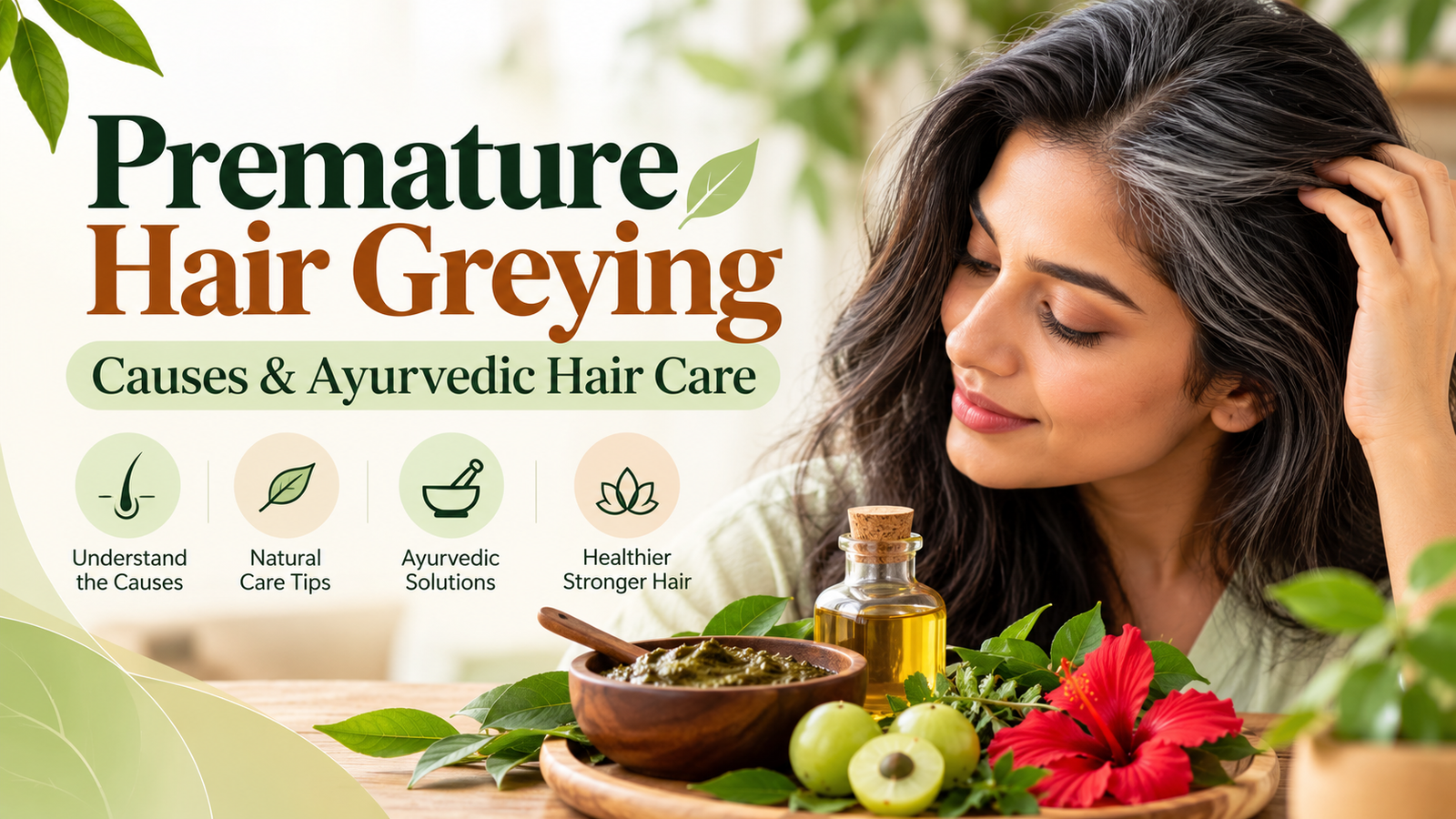

Noticing grey or white strands at an early age can be surprising. For some people, hair greying begins gradually with a few strands around the temples, while others notice more visible changes over time. Although greying is a natural part of ageing, premature hair greying can sometimes be associated with genetics, lifestyle factors or underlying health conditions.
Understanding why hair loses its natural colour is the first step towards making informed hair care choices. From maintaining a balanced diet to following a consistent scalp care routine, several habits can support overall hair health.
At AyurCare UAE, individuals can explore traditional Ayurvedic beauty and hair care services, including herbal hair packs and hot oil massage. These services are part of a holistic hair wellness approach, but they should not be considered proven treatments for restoring pigment to grey hair.
In this guide, discover the common causes of hair greying, practical prevention tips, and how to approach Ayurvedic hair care safely.
What Is Hair Greying?
Hair greying, also called canities, occurs when hair produces less melanin, the pigment responsible for its natural colour. Hair follicles contain pigment-producing cells called melanocytes. As these cells become less active or are depleted over time, newly growing hair may appear grey, silver or white.
The age at which greying begins varies from person to person. Genetics plays a major role, and some people begin noticing grey strands much earlier than others.
Grey hair itself is not a disease. However, when significant greying occurs unusually early, especially alongside other symptoms, a medical assessment may help identify any contributing health issues.
What Causes Premature Hair Greying?
There is no single explanation for premature hair greying. Several factors may influence when it begins and how quickly it progresses.
1. Genetics and family history
Genetics is one of the most important factors associated with early hair greying. If your parents or close relatives started greying at a young age, you may experience a similar pattern.
Even with a consistent hair care routine, hereditary greying may continue because hair colour is influenced by biological processes inside the follicles.
2. Nutritional deficiencies
Certain nutritional deficiencies, including vitamin B12 deficiency, have been associated with premature hair greying. Other nutrient associations have also been reported, although the evidence varies.
A balanced diet can support normal hair growth and general health. If greying begins unexpectedly or is accompanied by fatigue, hair loss or other symptoms, a healthcare professional may recommend appropriate blood tests.
Avoid taking high-dose vitamins or minerals without confirming that supplementation is needed.
3. Long-term stress
Ongoing stress has been associated with changes in hair pigmentation. Research suggests that stress-related biological pathways may affect pigment-producing cells, although the relationship is complex and individual outcomes vary.
Stress management, adequate sleep, relaxation and regular physical activity can support overall well-being. These habits cannot guarantee that hair greying will stop or reverse.
4. Smoking
Research has found an association between smoking and premature hair greying. Smoking also affects general health, so avoiding tobacco is a sensible step towards healthier living.
5. Certain medical conditions
Some thyroid disorders, autoimmune conditions and other health issues may be associated with changes in hair pigmentation. The presence of grey hair alone does not mean that someone has an underlying illness.
A medical assessment is particularly useful when greying develops rapidly or occurs alongside other unexplained symptoms.
6. Natural ageing
As people age, the activity of pigment-producing cells in hair follicles changes. This is a normal biological process and is not necessarily a sign of poor health.
Understanding the difference between natural ageing and potentially premature greying helps people choose realistic hair care goals.
Can Premature Grey Hair Be Reversed Naturally?
This is one of the most common questions about hair greying.
At present, there is no established treatment that reliably restores the natural colour of already-grey hair. In some cases, hair pigmentation changes may be associated with a treatable underlying condition, but results are not guaranteed.
If a nutritional deficiency or another medical issue is identified, treating it may improve the associated condition and could affect further greying in some cases. However, hereditary greying and normal age-related changes generally cannot be reversed through oils, shampoos or herbal remedies alone.
Natural hair care is best viewed as a way to support scalp comfort, hair condition and overall wellness, rather than a guaranteed way to turn grey hair black again.
Ayurvedic Hair Care for Premature Greying
Ayurveda takes a holistic approach to hair and scalp wellness, considering individual routines, diet, lifestyle and traditional external therapies. People interested in Ayurvedic hair care in Abu Dhabi can discuss suitable options with a qualified practitioner.
AyurCare UAE lists herbal hair packs and hot oil massage among its beauty therapy services.
1. Herbal hair pack

Herbal hair packs are traditionally used in hair care routines. Depending on their ingredients, they may help condition the hair and improve its appearance.
However, there is insufficient reliable clinical evidence that herbal hair packs restore natural hair pigmentation or permanently reverse premature greying.
Choose products suitable for your scalp and perform a patch test when appropriate, especially if you have sensitive skin.
2. Ayurvedic hot oil massage

Hot oil massage is a traditional hair care practice that may help condition dry hair and provide a relaxing self-care experience.
At AyurCare UAE, hot oil massage is listed as a hair and beauty service. A practitioner can explain the available options and whether the service is suitable for you.
Use comfortably warm oil rather than hot oil to avoid burns. Massage should not be presented as a proven method for restoring melanin or reversing grey hair.
3. Personalized hair wellness guidance
Hair concerns differ from person to person. A consultation can help you discuss your scalp condition, daily hair care habits and the types of traditional services available.
If premature greying is sudden or accompanied by other symptoms, seek medical assessment to check for possible underlying causes before relying on complementary therapies.
Natural Ways to Support Healthy Hair
Although no home remedy can guarantee the prevention of grey hair, healthy daily habits support overall hair and scalp health.
Eat a balanced, nutrient-rich diet
Include a variety of foods from different food groups.
-
Protein: Eggs, fish, lentils, beans and other suitable protein sources.
-
Vitamin B12: Foods such as eggs, dairy products and fortified foods, depending on your dietary preferences.
-
Iron and zinc: Legumes, seeds, nuts, whole grains and other appropriate sources.
-
Fruits and vegetables: A variety of colourful produce for vitamins, minerals and antioxidants.
-
Healthy fats: Suitable sources such as nuts, seeds and fish.
A balanced diet supports normal hair growth, but eating particular foods will not necessarily prevent genetically determined greying.
Manage stress and prioritise sleep
Regular sleep, physical activity, relaxation exercises and enjoyable activities may help manage stress. These practices benefit general health, even though they cannot guarantee a change in hair colour.
Avoid harsh hair treatments
Frequent chemical treatments, excessive heat and unsuitable products can damage the hair shaft. Gentle cleansing, conditioning and careful styling can help reduce breakage.
Hair damage and loss of pigment are different processes: preventing breakage does not necessarily prevent greying.
Protect your scalp
Maintain a clean scalp and choose products appropriate for your hair type. If you experience persistent itching, redness, scaling or hair loss, seek professional advice rather than repeatedly trying new remedies.
When Should You Consult a Doctor About Grey Hair?
Consider seeking medical advice if:
-
Grey hair develops unusually early or increases rapidly.
-
Greying occurs alongside unexplained fatigue or other new symptoms.
-
You experience significant hair loss, scalp inflammation or patchy changes in hair colour.
-
You suspect a nutritional deficiency or thyroid-related problem.
-
You are considering supplements or treatments advertised as reversing grey hair.
A healthcare professional can review your medical history, examine your scalp and recommend tests when appropriate. Correcting an identified deficiency may be beneficial, but unnecessary supplements can be harmful.
Why Choose AyurCare UAE for Traditional Hair Care?

AyurCare UAE is an Ayurvedic health centre in Mussafah, Abu Dhabi. Its website describes a range of traditional wellness services and lists herbal hair packs and hot oil massage under beauty therapy.
Individuals interested in traditional hair care can contact the centre to enquire about service availability, practitioner qualifications and suitable options.
The focus should be on informed, individualized care and realistic expectations. Neither Ayurvedic therapies nor natural oils should be promoted as guaranteed cures for premature greying.
Frequently Asked Questions About Hair Greying
1. What is the main cause of premature hair greying?
Genetics is a major factor. Nutritional deficiencies, smoking, stress and certain health conditions may also be associated with premature greying.
2. Can Ayurvedic treatment turn grey hair black again?
There is no strong clinical evidence that Ayurvedic oils, herbal packs or massage reliably restore natural hair pigment. Ayurvedic hair care may support conditioning and general wellness, but it should not be advertised as a proven cure for grey hair.
3. Which vitamins are associated with premature greying?
Vitamin B12 deficiency has been associated with premature greying, and other nutritional factors are being studied. Testing and supplementation should be guided by a qualified healthcare professional.
4. Does stress cause grey hair?
Research suggests that stress may influence hair pigmentation, but the relationship is complex. Managing stress supports general health but does not guarantee that grey hair will stop developing.
5. Can amla oil prevent grey hair?
Amla is traditionally used in hair care, but there is insufficient high-quality clinical evidence that amla oil prevents or reverses premature greying. It may be used as a cosmetic hair care product if suitable for your scalp.
6. Is plucking grey hair harmful?
Plucking a grey hair will not cause additional grey hairs to grow. However, repeated plucking can damage the follicle and may contribute to local hair loss. The replacement hair generally retains its underlying pigmentation pattern.
7. How can I care for grey hair naturally?
Use gentle hair care products, maintain a balanced diet, minimise excessive heat and harsh chemical treatments, and seek medical advice for sudden or unusually early greying. These steps support hair health but cannot guarantee that grey hair will be prevented.
8. Where can I enquire about Ayurvedic hair care in Abu Dhabi?
You can contact AyurCare UAE to ask about its herbal hair pack and hot oil massage services.
-
Website: https://ayurcareuae.com/
-
Treatments: https://ayurcareuae.com/treatments/
-
Contact: https://ayurcareuae.com/contact/
Explore Hair Wellness at AyurCare UAE
Hair greying is a natural process, but understanding its causes can help you make better decisions about your hair care routine.
If you are interested in traditional hair wellness, AyurCare UAE offers options to explore, including herbal hair packs and hot oil massage. Contact the centre to discuss available services and whether they suit your individual needs.
AyurCare UAE — Ayurvedic Health Centre, Abu Dhabi
-
Phone: +971 2 626 6169
-
Mobile: +971 50 593 3402
-
Email: info@ayurcareuae.com
Medical disclaimer: This article is for educational purposes only and does not replace professional medical advice, diagnosis or treatment.