

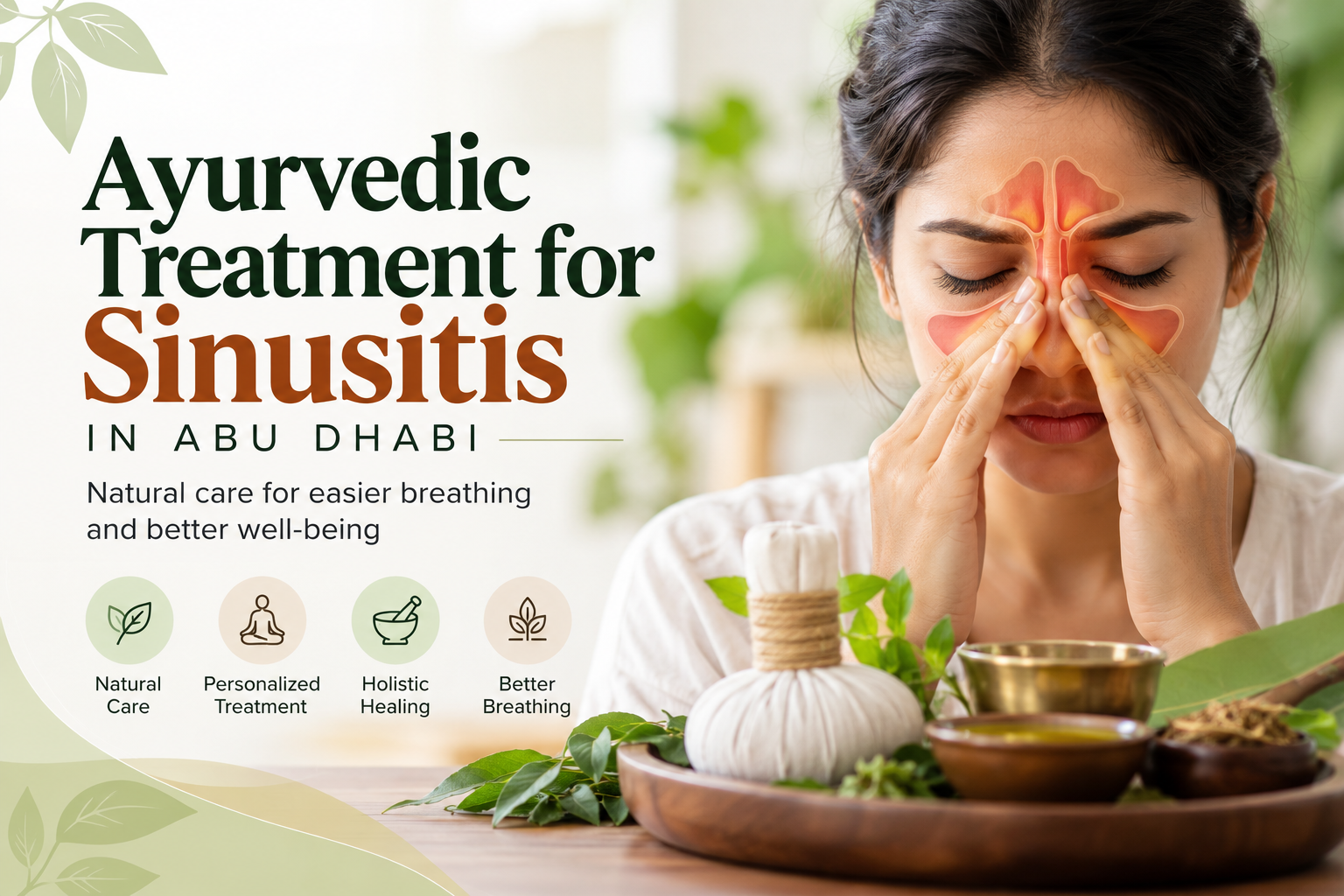

Sinus congestion, facial pressure, headaches and difficulty breathing through the nose can make everyday life uncomfortable. Whether symptoms occur after a common cold or return repeatedly because of allergies, sinus problems can affect sleep, concentration and overall well-being.
At AyurCare UAE, an Ayurvedic health centre in Abu Dhabi, individuals can explore traditional Ayurvedic care through a personalized consultation. Understanding the causes of sinusitis, recognizing its symptoms and choosing appropriate care are important steps towards better respiratory comfort.
This guide explains sinusitis, its common triggers, supportive home-care measures and how Ayurveda may form part of an individualized wellness plan.
What Is Sinusitis?
Sinusitis is inflammation of the tissue lining the sinuses, which are air-filled spaces around the nose, cheeks, forehead and eyes. When this lining becomes inflamed, mucus may not drain properly, creating congestion and pressure.
Sinusitis often develops after a cold or other respiratory infection. Allergies and structural problems inside the nose can also contribute to recurring symptoms. Most acute cases improve within a few weeks, while chronic sinusitis can persist for 12 weeks or longer.
People living in Abu Dhabi may also experience nasal symptoms associated with dust, indoor allergens, air conditioning or changes in environmental conditions. These factors may aggravate symptoms in some individuals, although they do not necessarily cause sinusitis.
Common Symptoms of Sinusitis
The symptoms of sinusitis can differ depending on the underlying cause and severity.
-
Blocked nose: Difficulty breathing comfortably through the nose.
-
Facial pressure: Discomfort around the cheeks, forehead or eyes.
-
Headaches: Pressure-related pain that may worsen when bending forward.
-
Nasal discharge: A runny nose or thick mucus.
-
Reduced sense of smell: Difficulty noticing familiar scents.
-
Postnasal drip: Mucus draining into the throat, sometimes causing coughing.
-
Bad breath: Unpleasant breath associated with nasal or sinus symptoms.
-
Fatigue: Tiredness caused by discomfort or disturbed sleep.
Not everyone experiences all these symptoms. Thick or discoloured mucus alone does not establish that an infection is bacterial or that antibiotics are necessary.
What Causes Sinusitis?
Understanding potential triggers helps people make informed decisions about prevention and treatment.
1. Viral infections
A common cold or flu can inflame the nasal passages and interfere with normal sinus drainage. Viral infections are a frequent cause of acute sinusitis.
2. Allergies
Allergic rhinitis, including reactions to dust mites, pollen or other allergens, can cause swelling inside the nose. In susceptible people, this may contribute to congestion and recurring sinus symptoms.
3. Environmental irritants
Dust, smoke, strong fragrances and other airborne irritants may aggravate nasal inflammation. Identifying personal triggers can help reduce discomfort.
4. Nasal polyps or structural problems
Nasal polyps or a deviated nasal septum can interfere with airflow and drainage. Persistent or one-sided symptoms may require assessment by an ear, nose and throat specialist.
5. Recurrent respiratory problems
Repeated infections or ongoing nasal inflammation can contribute to recurring episodes. A healthcare professional can help determine whether the symptoms are related to sinusitis, allergies or another condition.
Acute Sinusitis vs Chronic Sinusitis
| Feature | Acute sinusitis | Chronic sinusitis |
|---|---|---|
| Duration | Usually improves within a few weeks | Persists for 12 weeks or longer |
| Common associations | Colds and respiratory infections | Persistent inflammation, allergies or nasal polyps |
| Symptoms | Congestion, facial pressure and discharge | Persistent congestion, reduced smell and facial discomfort |
| Care approach | Symptom relief and monitoring | Assessment of underlying causes and an appropriate long-term plan |
Repeated or prolonged symptoms should not automatically be treated as a simple cold. A healthcare professional can assess the condition and recommend suitable treatment.
Ayurvedic Understanding of Sinusitis
Ayurveda approaches health through an individualized assessment of symptoms, daily routines, diet and overall well-being. Traditional Ayurvedic explanations may describe certain nasal and sinus complaints in relation to imbalances involving Kapha and other doshas.
These concepts belong to the traditional Ayurvedic framework and should not be considered a substitute for a medical diagnosis of sinusitis.
An Ayurvedic consultation may explore the pattern of congestion, the frequency of symptoms, sleep quality, dietary habits and environmental triggers before discussing suitable care options.
The goal is to choose an appropriate, individualized approach without delaying evidence-based medical treatment when it is needed. Evidence for Ayurvedic therapies specifically treating or curing sinusitis remains limited, so results should not be guaranteed.
Ayurvedic Treatment for Sinusitis in Abu Dhabi
People looking for Ayurvedic treatment for sinusitis in Abu Dhabi may wish to understand which traditional therapies are appropriate for their symptoms.
At AyurCare UAE, the published services include Ayurvedic consultations and Nasyam therapy. The suitability of any therapy should be assessed individually by a qualified practitioner.
1. Ayurvedic consultation
A consultation helps establish the person’s symptom history, previous treatments, allergies, current medications and other relevant health factors.
Based on this information, the practitioner can discuss whether Ayurvedic care is appropriate alongside conventional medical management.
2. Nasyam therapy
Nasyam is a traditional Ayurvedic procedure involving the administration of substances through the nasal route under a specific therapeutic protocol.
Although Nasyam is associated with traditional Ayurvedic practice, strong clinical evidence establishing its effectiveness and safety for sinusitis is limited. Nasal administration may also cause harm if unsuitable substances or techniques are used.
It should only be considered following an appropriate assessment by a qualified practitioner. Do not put herbal oils, powders or homemade preparations into the nose without professional guidance.
3. Individualized lifestyle guidance
An Ayurvedic practitioner may discuss sleep routines, hydration, diet and general wellness practices as part of a personalized plan.
These measures can support overall well-being but should not be presented as a cure for sinusitis or as a replacement for necessary medical care.
4. Follow-up and symptom monitoring
Keeping track of congestion, headaches, nasal discharge and changes in smell can help assess whether symptoms are improving.
Persistent or worsening symptoms require medical reassessment, even if a person is already receiving complementary care.
Home Remedies and Daily Habits That May Help Relieve Sinus Symptoms
Simple self-care measures may help make mild sinus symptoms more manageable while the underlying inflammation settles.
Stay hydrated
Drink adequate fluids throughout the day. Staying hydrated supports normal mucus consistency and general health.
Try saline nasal rinsing safely
A saline nasal rinse may help clear mucus and irritants from the nasal passages. Use sterile, distilled, or previously boiled and cooled water, and clean the rinsing device according to its instructions. Never use untreated tap water for nasal irrigation.
Avoid personal triggers
If dust, smoke, perfume or other irritants make symptoms worse, reduce exposure where practical. People with suspected allergies may benefit from discussing allergy management with a healthcare professional.
Maintain comfortable indoor air
Avoid excessive exposure to smoke and other airborne irritants. If air conditioning or very dry indoor air seems to aggravate nasal discomfort, consider whether the indoor environment needs adjustment.
Get sufficient rest
Sleep and rest support general recovery from respiratory infections. If congestion regularly interferes with sleep, discuss appropriate symptom management with a healthcare professional.
These measures may ease symptoms, but they do not guarantee faster recovery or prevent every recurrence.
Foods and Lifestyle Habits for Overall Respiratory Wellness
There is no specific diet proven to cure sinusitis. However, maintaining balanced nutrition and healthy routines supports general well-being.
Consider the following habits:
-
Eat a balanced diet with vegetables, fruits, whole grains and suitable protein sources.
-
Drink enough water according to your individual needs.
-
Avoid smoking and exposure to secondhand smoke.
-
Maintain a regular sleep schedule.
-
Identify and manage diagnosed allergies with appropriate professional guidance.
-
Avoid self-prescribing herbal preparations or combining Ayurvedic products with medications without checking for potential interactions.
Some people find warm drinks comforting when they have a blocked nose or irritated throat. However, comfort measures should not be confused with treatments that eliminate sinus infections.
When Should You See a Doctor for Sinusitis?
Although mild sinusitis often improves without specific treatment, some symptoms need medical attention.
Consult a healthcare professional if:
-
Symptoms persist without improvement or continue beyond approximately 10 days.
-
Symptoms initially improve but then become significantly worse.
-
Sinusitis keeps returning.
-
Facial pain or headaches are severe.
-
Symptoms persist for several weeks or interfere with daily activities.
Seek urgent medical attention for swelling or redness around the eyes, vision changes, severe headache with neck stiffness, confusion or other signs of a potentially serious complication. Do not delay medical evaluation while trying home remedies or complementary therapies.
Why Consider AyurCare UAE for Ayurvedic Consultation?
AyurCare UAE is located in Abu Dhabi and publishes information about Ayurvedic consultations, traditional therapies and wellness services. Its consultation process includes a physical examination, Ayurvedic assessment, personalized dietary guidance and lifestyle recommendations.
For people exploring complementary care for recurring sinus complaints, a consultation can help them discuss their symptoms and understand which options may be suitable.
When choosing a provider, consider practitioner qualifications, transparent information about the proposed therapy, potential risks, and coordination with conventional medical care.
Ayurvedic treatment should be approached as complementary care where appropriate, not as a guaranteed cure for sinusitis. Do not stop prescribed medication or postpone an ENT consultation without medical advice.
Frequently Asked Questions About Sinusitis
1. Can Ayurveda help with sinusitis?
Ayurveda offers traditional approaches that some people explore for symptom management and general wellness. However, high-quality evidence that Ayurvedic treatments cure sinusitis is limited. A qualified practitioner can discuss potential benefits, risks and suitability alongside appropriate medical care.
2. Which Ayurvedic therapy is used for sinus problems?
Nasyam is one traditional Ayurvedic nasal therapy. Its suitability depends on the person’s condition and health history. Evidence for its effectiveness in sinusitis is limited, and it should not be attempted with unapproved substances or without qualified guidance.
3. Can sinusitis cause headaches?
Yes. Sinusitis may cause pressure or pain around the forehead, cheeks and eyes. However, migraines and other conditions can produce similar symptoms, so recurring or severe headaches should be assessed appropriately.
4. How long does sinusitis take to improve?
Many acute cases improve within two to four weeks, although the duration varies. Symptoms lasting 12 weeks or longer may indicate chronic sinusitis and require professional assessment.
5. Is sinusitis contagious?
Sinusitis itself is inflammation and is not generally considered contagious. However, the viral infection that triggers some cases may spread between people.
6. Is steam inhalation a proven treatment for sinusitis?
Steam inhalation has not been shown to reliably treat sinusitis, and hot water or steam can cause burns. Safer options, such as saline nasal rinsing performed with appropriate water, may help relieve some symptoms.
7. Can allergies cause recurring sinus symptoms?
Yes. Allergic inflammation can contribute to nasal congestion and may aggravate recurring sinus symptoms. Identifying triggers and getting appropriate allergy management can help some people.
8. Where can I enquire about Ayurvedic consultation in Abu Dhabi?
You can contact AyurCare UAE to ask about consultation availability and whether its services are appropriate for your needs. The clinic’s contact information is available on its official website.
Explore Personalized Ayurvedic Care at AyurCare UAE
Recurring nasal congestion, facial pressure and sinus discomfort deserve an appropriate assessment. Understanding your symptoms and their possible causes can help you make informed decisions about treatment.
AyurCare UAE offers Ayurvedic consultations in Abu Dhabi for individuals interested in discussing traditional wellness approaches. Contact the clinic to enquire about available services, practitioner assessment and suitable next steps.
Book a consultation
-
Website: https://ayurcareuae.com/
-
Contact page: https://ayurcareuae.com/contact/
-
Phone: +971 2 626 6169
-
Mobile: +971 50 593 3402
-
Email: info@ayurcareuae.com
Medical disclaimer: This article is for educational purposes only and does not replace diagnosis or treatment by a qualified healthcare professional.